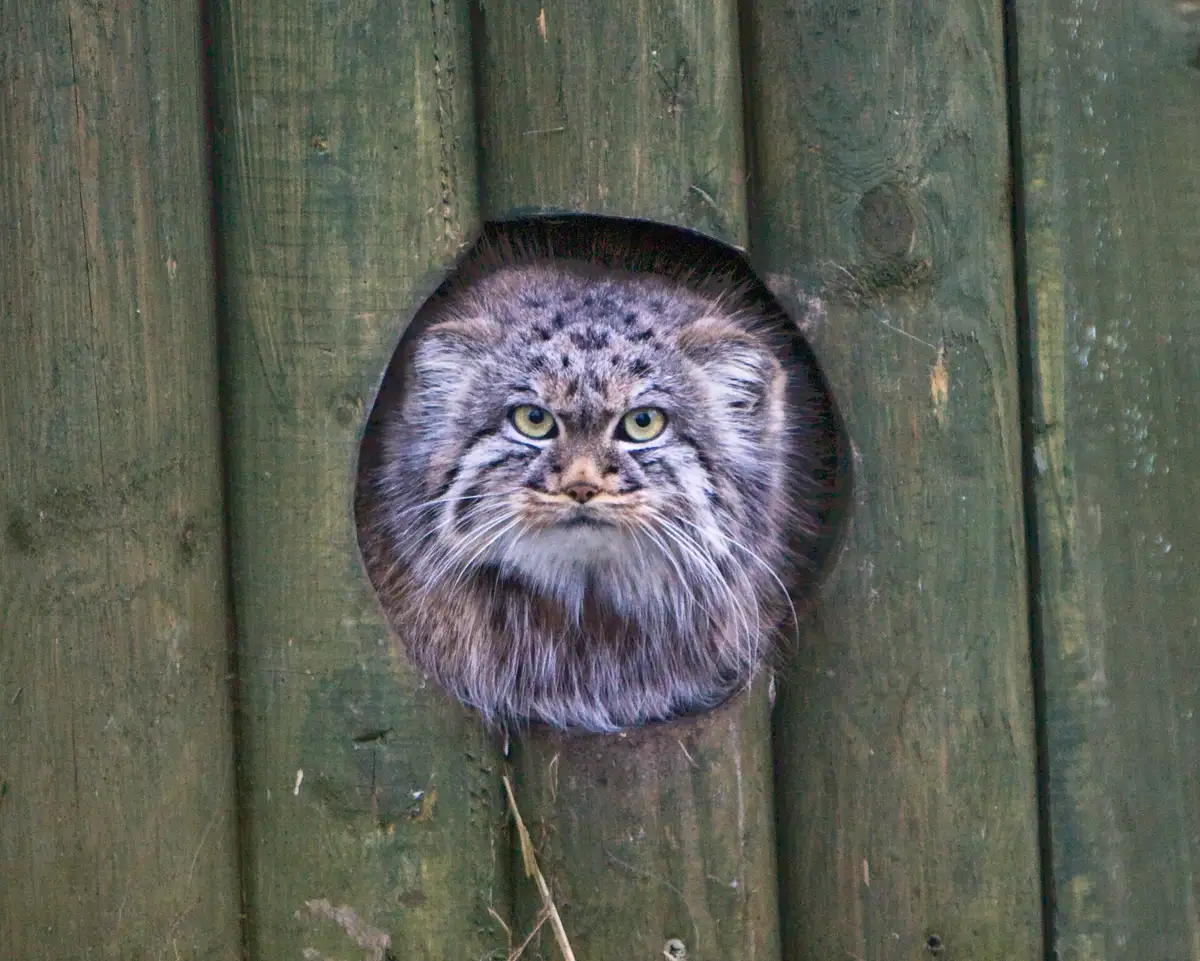
The Pallas's cat is one of the most elusive small felids in the world. It is solitary, territorial, and active mainly during the twilight hours of dawn and dusk, though it will hunt during the day in colder months. Where many cats rely on agility and speed, the manul relies almost entirely on concealment. Its short legs and stocky frame make it a poor sprinter, so survival hinges on never being noticed in the first place.
When a threat appears, the manul's instinct is not to run but to freeze. It flattens its body against the ground, tucks in, and uses its low-set ears and grey, frost-flecked coat to merge with the surrounding rock. Only as a last resort will it bolt for the nearest crevice or burrow. This behavior, beautifully suited to a treeless landscape, is part of why the cat is so rarely glimpsed in the wild.
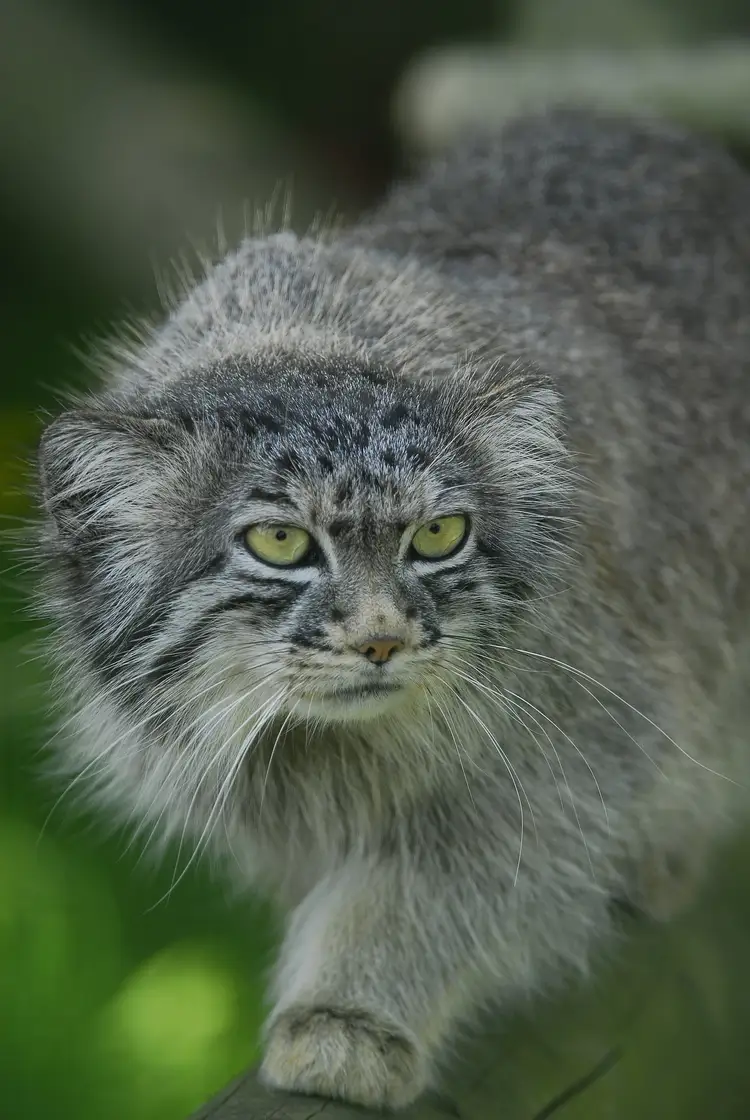
Behavioral signatures
Solitary
Outside the brief breeding season, manuls live alone, maintaining and patrolling individual home ranges marked with scent.
Crepuscular
Most active at dawn and dusk, when prey is moving and the flat light helps conceal a low-slung hunter.
Camouflage-first
Rather than flee, a threatened manul freezes, flattens, and relies on its grey coat to dissolve into the rocks.
Low & slow
It moves in a crouched, deliberate creep between cover, rarely sprinting — its body is built for stealth, not speed.
Communication & temperament
Manuls communicate through scent marking, body posture, and a limited range of vocalizations including growls, yelps, and a distinctive call used during the breeding season. For most of the year, however, they actively avoid one another. Encounters between adults are brief and largely confined to mating.
In captivity, Pallas's cats are known for being wary and easily stressed — a reflection of their wild temperament. They remain alert and defensive even when well cared for, a trait that complicates breeding programs and underscores just how finely tuned this animal is to a life of caution.