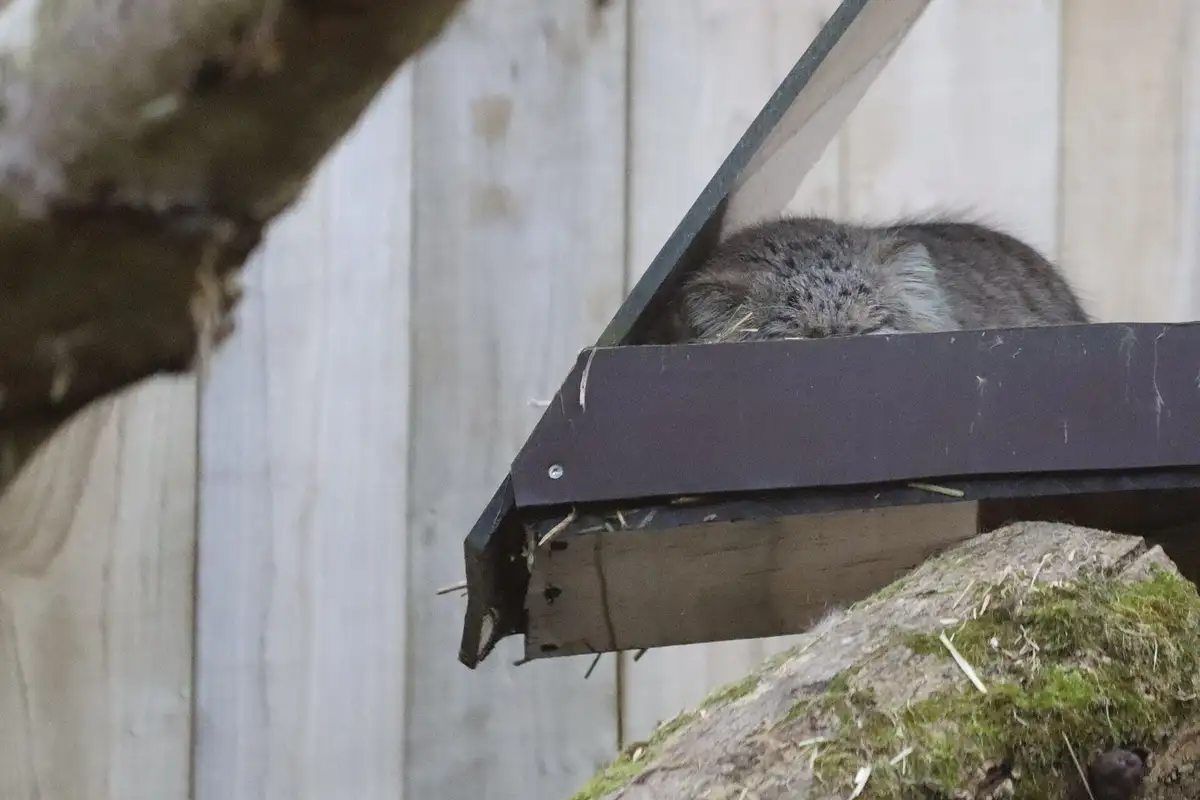
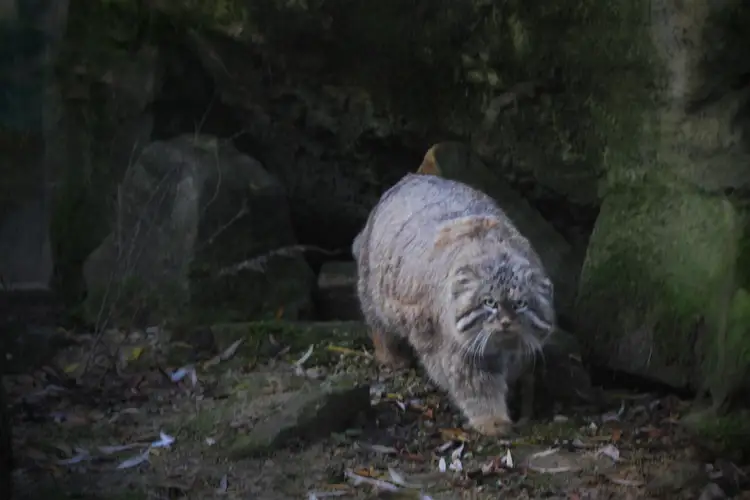
Pallas's cats are animals of the cold, dry, open lands of Central Asia. Their range stretches in a broad band from the Caspian region eastward across the steppes and mountains of Mongolia and China. Within that enormous area they are patchily distributed, tied closely to a specific combination of features: short vegetation for cover, rocky outcrops or marmot burrows for shelter, and healthy populations of small prey.
These are not forest cats. They avoid dense woodland and truly lowland desert alike, favoring montane grassland, semi-desert, and rocky steppe between roughly 450 and 5,050 meters in elevation. The terrain is defined by temperature extremes — scorching, arid summers and winters that plunge far below freezing with biting wind and little snow cover to soften it.
Across the range
Mongolia & China
The stronghold of the species. Vast steppe, semi-desert, and rocky grassland on the Mongolian Plateau support the densest known populations.
Central Asian states
Kazakhstan, Kyrgyzstan, Tajikistan, Uzbekistan, and Turkmenistan hold scattered populations across montane steppe and cold desert margins.
Russia & the Caucasus
Southern Siberia, the Altai, Transbaikal, and isolated pockets in the Caucasus mark the northern and western edges of the range.
Tibetan Plateau & Himalaya
Recorded above 5,000 m in parts of Nepal, Bhutan, and the Tibetan Plateau — among the highest-living of all cats.
Shelter & home range
Because the manul cannot rely on speed to escape danger across open ground, shelter is central to its survival. It dens in rock crevices, small caves, and — very often — the abandoned burrows of marmots and other steppe mammals. These refuges buffer the cat against weather extremes and offer protection from larger predators such as eagles, wolves, and red foxes.
Home ranges are large relative to the cat's size, reflecting the low productivity of the steppe. Males in particular may range over tens of square kilometers, and densities are naturally low even in good habitat. This sparse distribution is one reason the species is so difficult to survey and study in the wild.