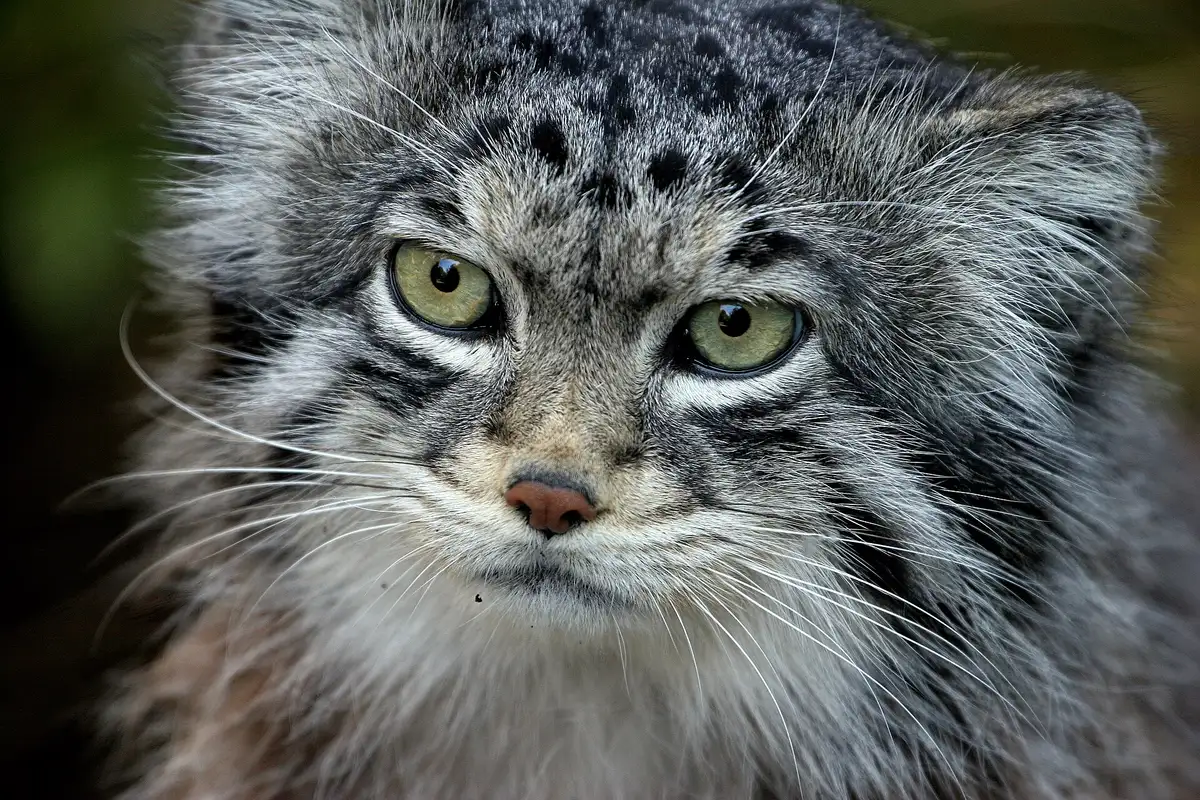
The Pallas's cat (Otocolobus manul) is a small wild cat named after the German naturalist Peter Simon Pallas, who first described the species in 1776. The name Otocolobus derives from Greek for "ugly-eared," a reference to its short, low-set ears — though most observers find the manul anything but ugly. It is the only species in its genus, making it evolutionarily distinct from the closely related leopard cats.
What strikes nearly everyone first is the fur. The manul carries the densest coat of any cat measured relative to its body size, an adaptation to the brutally cold, dry environments it inhabits. That coat, combined with a broad head and stout body, gives the illusion of a much larger animal. In reality, a Pallas's cat weighs only 2.5 to 4.5 kilograms — comparable to a typical house cat.
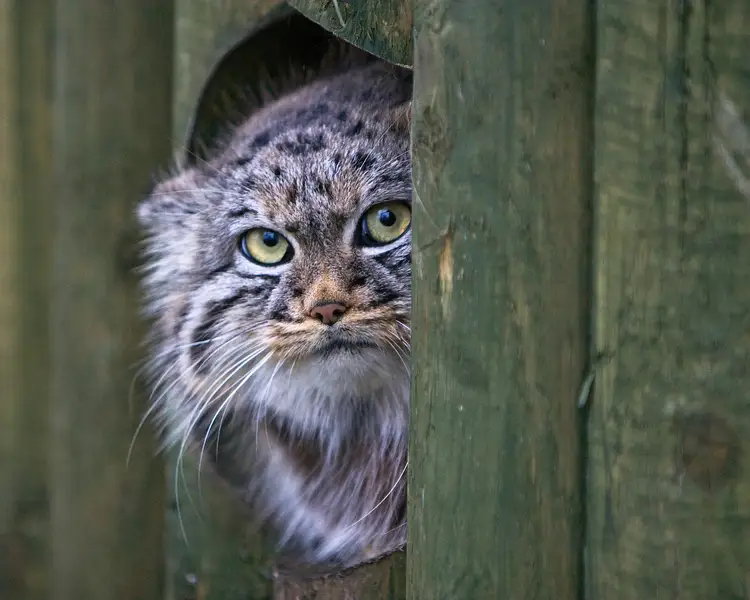
Defining anatomy
Coat
The densest and longest fur of any cat relative to body size — up to 9,000 hairs per cm² — which nearly doubles in length on the belly and tail for winter insulation.
Ears
Small, rounded, and set low and wide on the sides of the head, allowing the cat to peek over rocks and ridges while keeping a low silhouette.
Pupils
Round rather than vertical slits — unusual among small cats and thought to relate to the steppe's flat, diffuse light.
Build
Stocky and short-legged with a broad, flattened face. The thick coat exaggerates its size; the actual body is only slightly larger than a domestic cat's.
Taxonomy & relatives
Genetic studies place the manul within the Felinae subfamily, diverging from the leopard cat lineage several million years ago. Historically three subspecies were recognized based on coat color and markings across the range, though modern genetic work suggests the variation is more clinal than discrete. Regardless of classification, populations from the cold Mongolian plateau tend to be greyer, while those from more arid southern ranges can appear warmer and more ochre-toned.
Despite a superficial resemblance to a fluffy domestic cat, the manul is not closely related to house cats and does not interbreed with them. Its closest living relatives are the small Asian wild cats, and its unique appearance reflects a long, independent evolutionary path on the steppe.