Reproduction in the Pallas's cat is shaped by the steppe's short, harsh seasons. Mating occurs in a narrow window in late winter, around December to early spring depending on latitude. Females come into estrus only briefly — often a window of just a day or two — so males must locate and compete for receptive females quickly. This compressed timing helps ensure that kittens are born when spring brings milder weather and rising prey numbers.
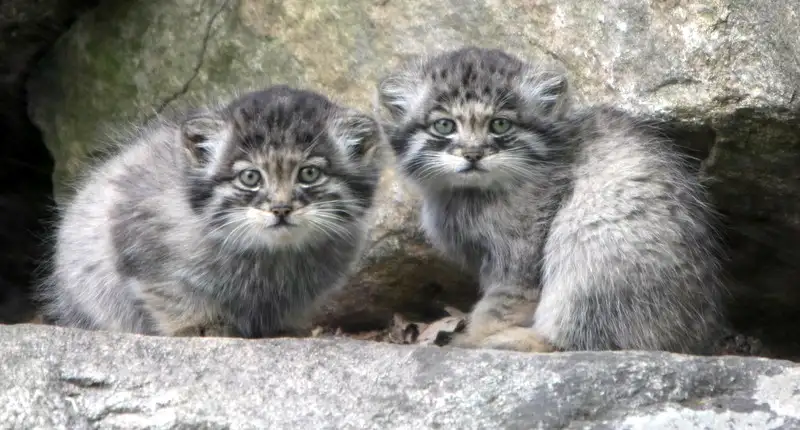
After a gestation of roughly 66 to 75 days, the female gives birth to a litter of two to six kittens in a sheltered den. Newborns are blind, helpless, and covered in a darker, woolly coat. The mother raises them alone; as in most cats, the male plays no role in rearing young.
From den to dispersal
Breeding season
A short window in late winter and early spring. Females are receptive for only a day or two, making timing critical.
Gestation
Roughly 66–75 days, after which the female gives birth in a sheltered den, rock crevice, or borrowed burrow.
Litter size
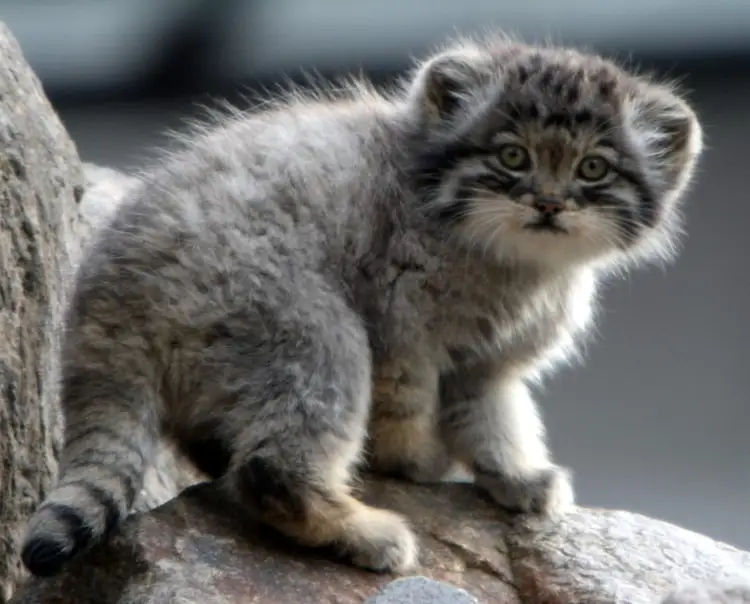
Typically 2–6 kittens, born blind and helpless with a darker, woolly coat that lightens as they mature.
Independence
Kittens begin hunting at around 4 months and reach adult size by 6–8 months, dispersing to find their own range.
Lifespan
Kittens grow quickly. They begin venturing out and learning to hunt at around four months and approach adult size by six to eight months, after which they disperse to establish their own home ranges. Females can breed in their first year, an adaptation that helps offset high juvenile mortality.
In the wild, life is short: many Pallas's cats live only a few years, with average wild lifespans estimated around six years given predation, disease, and the rigors of the climate. In captivity, where those pressures are removed, individuals can live to eleven or twelve years — though captive breeding remains challenging due to the species' sensitivity to stress and high infant susceptibility to disease.