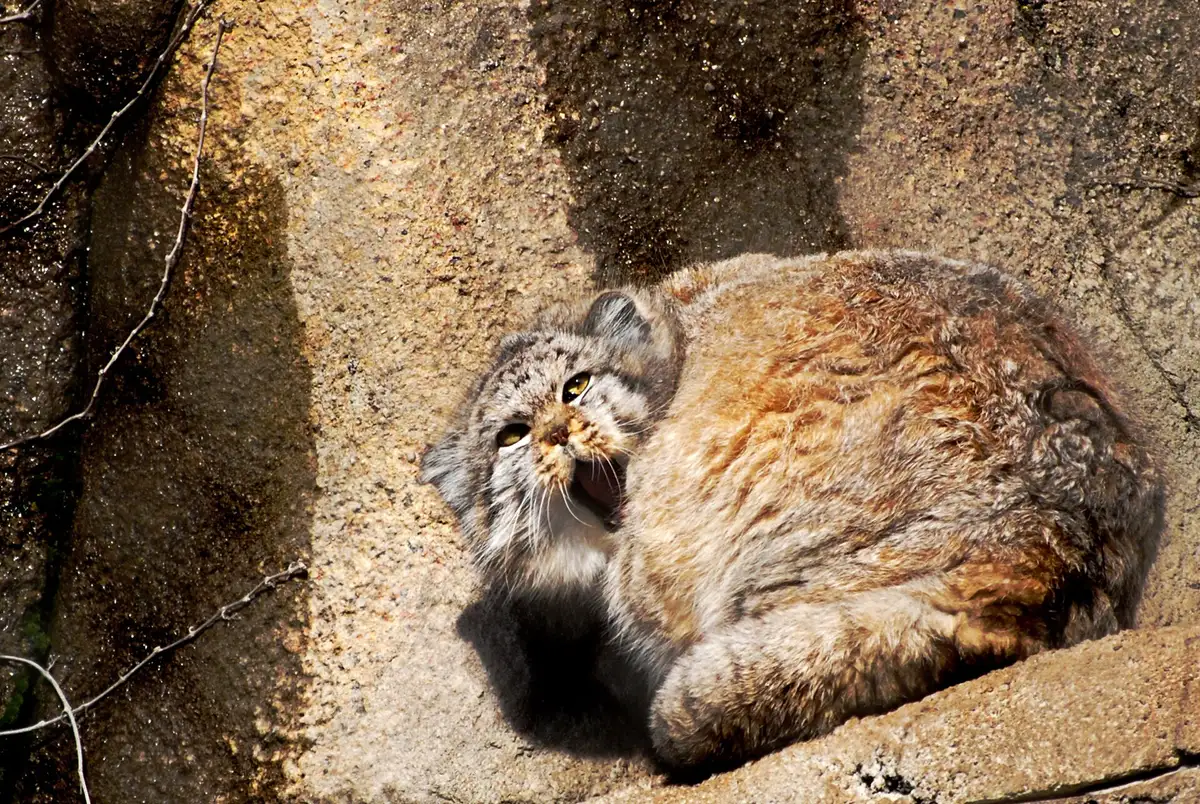
The Pallas's cat is currently classified as Least Concern by the IUCN, a status updated in 2020 after expanded surveys revealed the species was more widespread than once feared. That label, however, comes with an important caveat: the overall population trend is assessed as declining. The cat's natural rarity and vast, remote range make accurate counts extremely difficult, and local populations can vanish without ever being recorded.
The pressures are largely indirect. The manul is rarely targeted on purpose today, but it suffers from the cumulative effects of human activity across the steppe — degraded grassland, poisoned prey, incidental trapping, and predation by domestic and herding dogs. For a low-density specialist, even modest losses can tip a local population toward collapse.
Key threats
Habitat degradation
Overgrazing, mining, and infrastructure fragment the steppe and erode the prey base the cat depends on.
Prey poisoning
Programs to poison pikas and rodents as pests remove the manul's primary food and can poison cats directly.
Hunting & trapping
Historically hunted for its fur and still caught in traps set for other animals, or killed by herders' dogs.
Climate pressure
Shifting weather patterns alter prey cycles and snow conditions across a range already defined by extremes.
What is being done
IUCN status
Listed as Least Concern since 2020 after better survey data, but with a population trend assessed as declining.
Legal protection
Protected across much of its range and listed on CITES Appendix II, restricting international trade.
Research alliances
Coordinated field studies — notably the Pallas's Cat International Conservation Alliance — fill critical knowledge gaps.
Ex-situ programs
Zoos worldwide maintain careful breeding and health programs to safeguard genetic diversity and study the species.
A future on the steppe
Protecting the Pallas's cat is, in practice, about protecting the whole steppe ecosystem. Safeguarding pika and rodent populations, limiting poisoning campaigns, maintaining intact grassland, and reducing incidental trapping all benefit the manul alongside countless other species. International research collaborations continue to close basic gaps in our knowledge — from population size to disease ecology — that are essential to managing the species well.
For now, the manul endures across a huge sweep of Asia, hidden in plain sight among the rocks. Keeping it there will depend on sustained attention to a cat that, by its very nature, does everything it can not to be noticed.